
Today’s post curates the most relevant ideas, writing, and conversations from 2025 that shaped my thinking on GTM heading into 2026. If you’re new here, check out the Start Here page.
Hope that everyone had a relaxing holiday. As we close out 2025, we’re looking back at the themes that mattered most this year and how they’ll shape GTM in 2026.
This is about patterns and trends. Not predictions in isolation but the underlying shifts that explain why certain approaches are breaking and where advantage is moving next.
We’ll cover what actually changed in 2025, how AI reshaped output and access, and why judgement, emotion, and domain expertise will become the GTM edge heading into next year.
What Actually Changed in 2025
Cost reduction, layoffs, and operational efficiency defined much of 2025.
Across public markets and company financials, the signal was clear: pressure to do more with less intensified.
My perspective: AI isn’t eliminating work - it’s compressing the timeline of change.
What once unfolded over centuries, then decades, is now happening in years. Soon, maybe months. Categories are shifting faster. Skills are depreciating quicker. Leverage is beginning to concentrate toward the hands of those who know how to apply AI with judgment, not just deploy it for output.
In a recent conversation with Joe Rogan, Jensen Huang describes it best: the jobs that endure are the ones with purpose.
Purpose is human.
As AI accelerates output and automates execution, this trend keeps resurfacing.
When technology makes production cheap, the value doesn’t disappear - it moves.
Away from tools and toward judgment.
Away from volume and toward meaning.
Away from software and toward the people who decide how it’s used.
Output is abundant. Thinking is not.
Execution scales. Understanding doesn’t.
As we look ahead to 2026, the GTM teams that will succeed won’t be the ones who ship the fastest or automate the most. The winners will be the ones who understand their market deeply, exercises judgment, and use AI to amplify thinking rather than replace it.
Let’s look at how this materialized in 2025.
Output vs Judgement
When information and output become cheap - context, judgement, and insight become expensive.
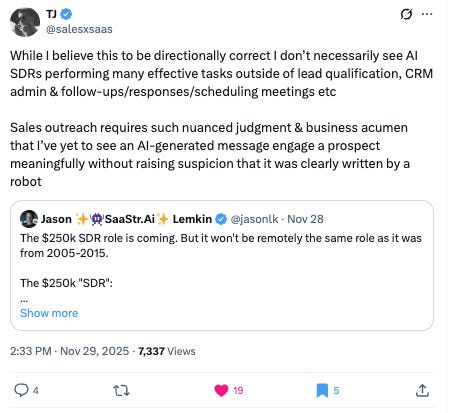
Credit TJ, Salesxsaas
AI dramatically increases what we can produce but it doesn’t tell us what matters.
That distinction is where the real shift begins.
As production scales, noise overwhelms signal.
Filters tighten. Attention becomes scarce.
Access, not output, becomes the constraint.
The New Constraint is Access
Technology made access easier. As a result, relevance became the filter.
Information isn’t lacking, signal is.
Output exploded, attention fragmented.
This brought a resurgence of familiar GTM behaviors that breaks through the filter:
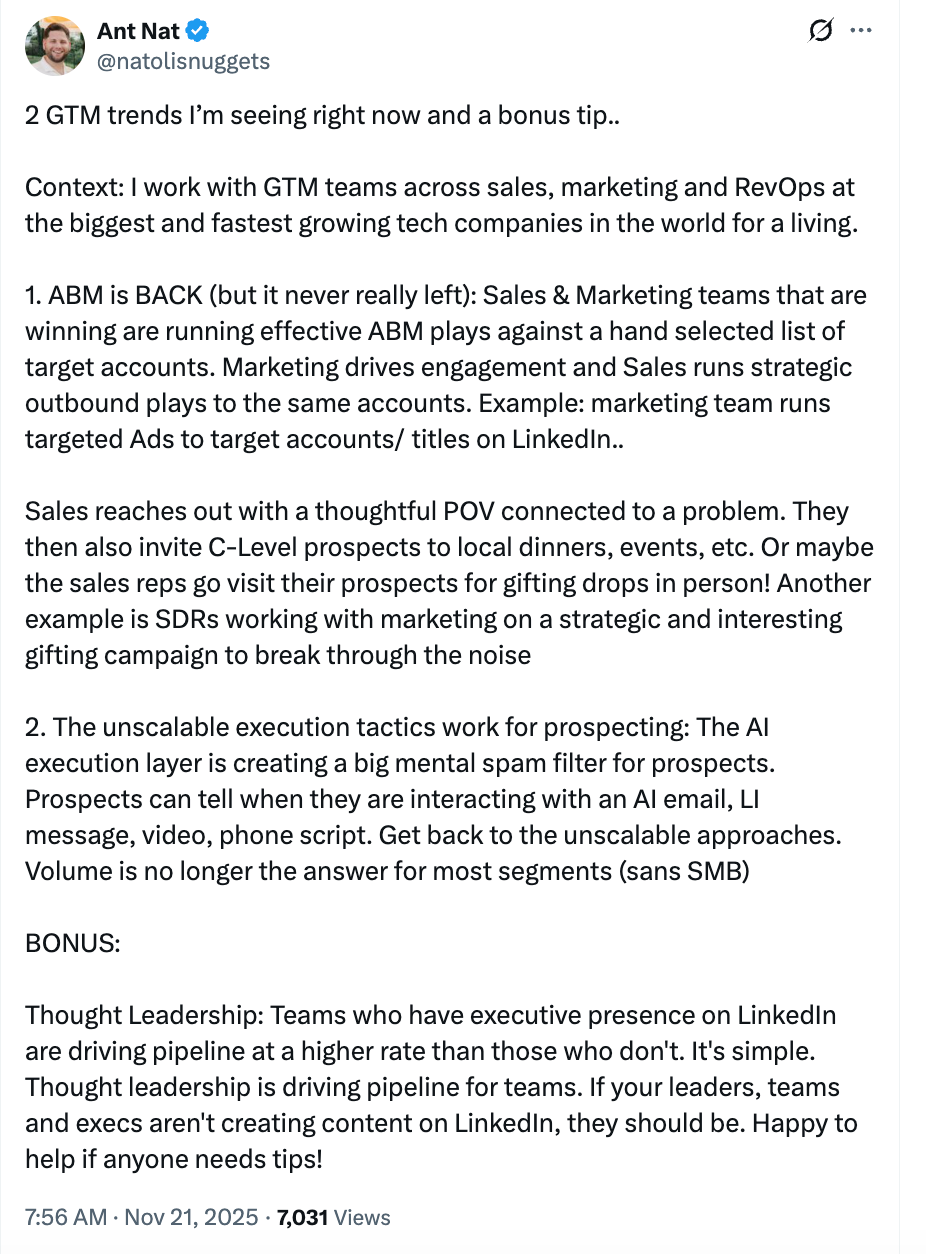
Introductions through trusted people.
Thoughtful, contextual communication.
Sharing ideas through earned credibility, not volume.
Access and attention look and feel different as technology evolves.
The underlying principles have remained the same.
Gaining access however isn’t just about relevance, it’s about resonance.
Emotion is the Last Non-Commoditized Layer
AI can simulate intelligence.
AI cannot originate resonance.
Emotion is harder still.
Trust. Curiosity. Tension. Belief.
These aren’t outputs, they’re reactions.
This is why, throughout late 2025, we saw a resurgence in storytelling across GTM:
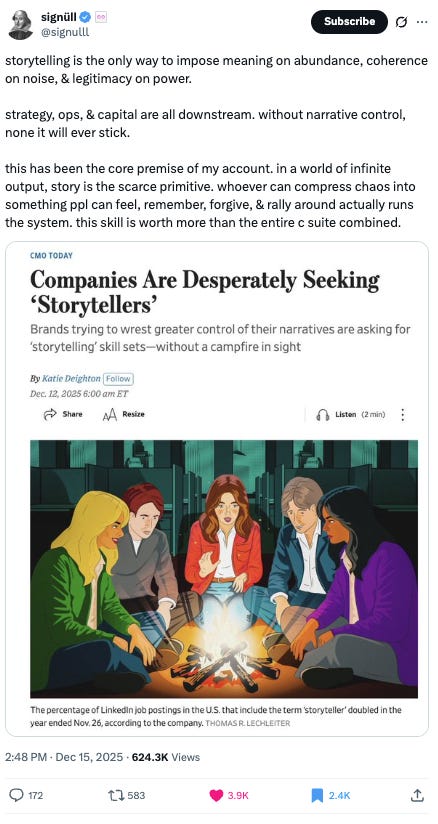
Great GTM doesn’t just transfer information. It creates felt understanding. When buyers feel seen and understood, they gain confidence in decisions that carry risk.
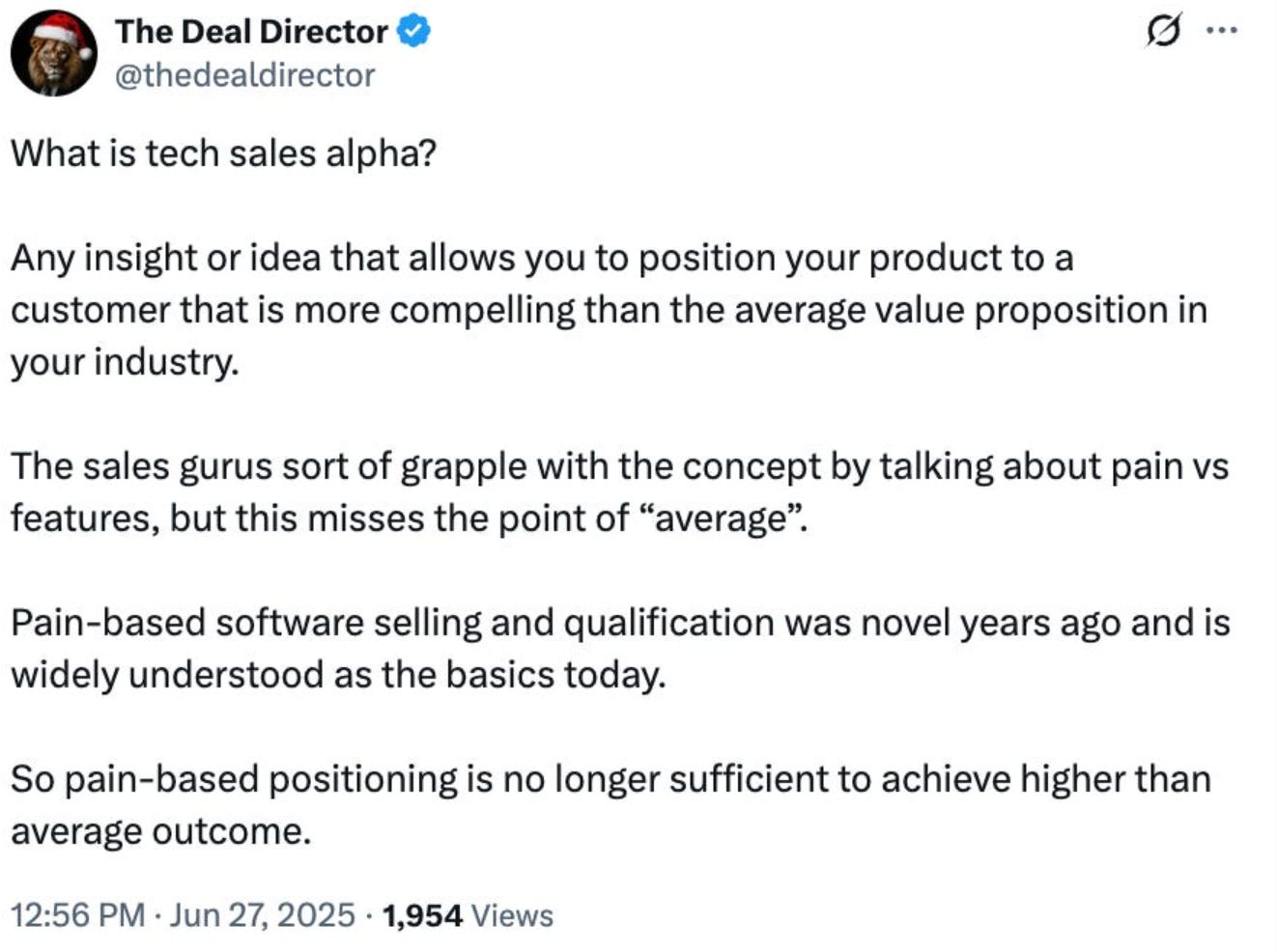
Credit Deal Director (Infra Play)
This is not a branding exercise or marketing trend.
It’s a survival mechanism in response to a world of abundance.
Resonance without depth however, is fragile if meaningless.
Meaning cannot exist without understanding.
Which is why emotion alone isn’t enough. It needs to be grounded in domain expertise, context, and judgement.
Domain Expertise > AI
AI can accelerate learning.
It cannot replace experience.
Domain expertise - knowing how buyers think, what they fear, and how they decide, compounds slowly. Time has always been the most expensive asset to acquire.
The price of real understanding is repetition, exposure, and failure:
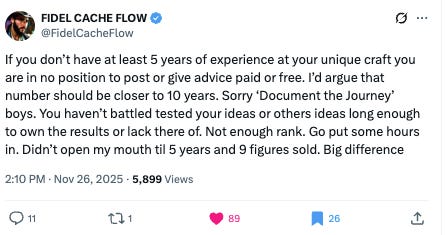
Credit Fidel Cache Flow
You can use AI to learn faster.
You can’t use AI to skip the work.
This hasn’t changed - and it won’t.
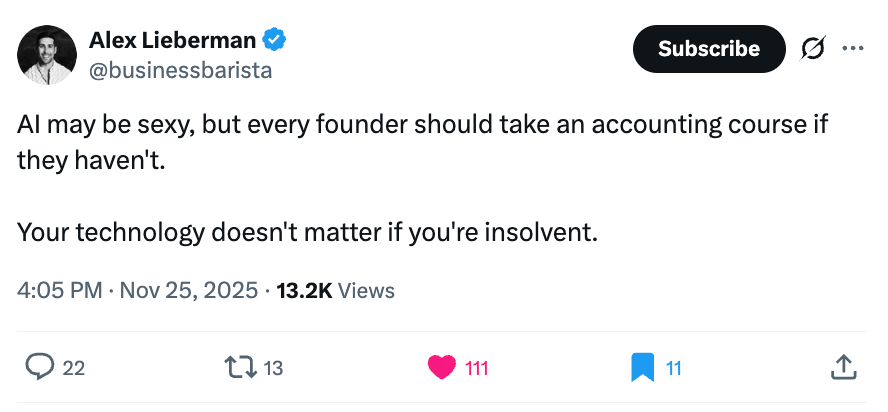
As tools converge and workflows standardize, the advantage shifts away from the systems and towards the people operating them.
Everyone has access to AI. Differentiation comes from applying judgement, which is shaped by time spent in a given domain. AI is a powerful technology that accelerates output and learning, but expertise must be earned.
Individuals Over Systems
Systems provide output.
Individuals provide perspective.
How people see the market.
How they frame problems.
How they exercise judgement.
As AI models and tools have become widely accessible, returns don’t converge - they diverge. The advantage shifts to those who know how to make AI effective: by giving it context, shaping workflows, and applying judgement.
That doesn’t live in systems alone. It lives in people:
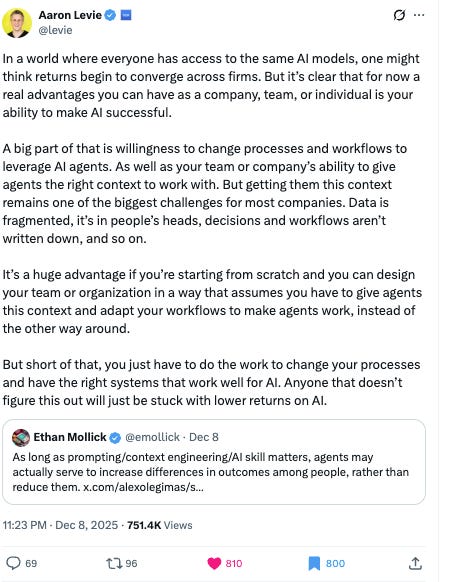
AI doesn’t eliminate jobs. It eliminates the middle.
Those who pair fundamentals with leverage pull ahead.
Those who don’t drift toward irrelevance.
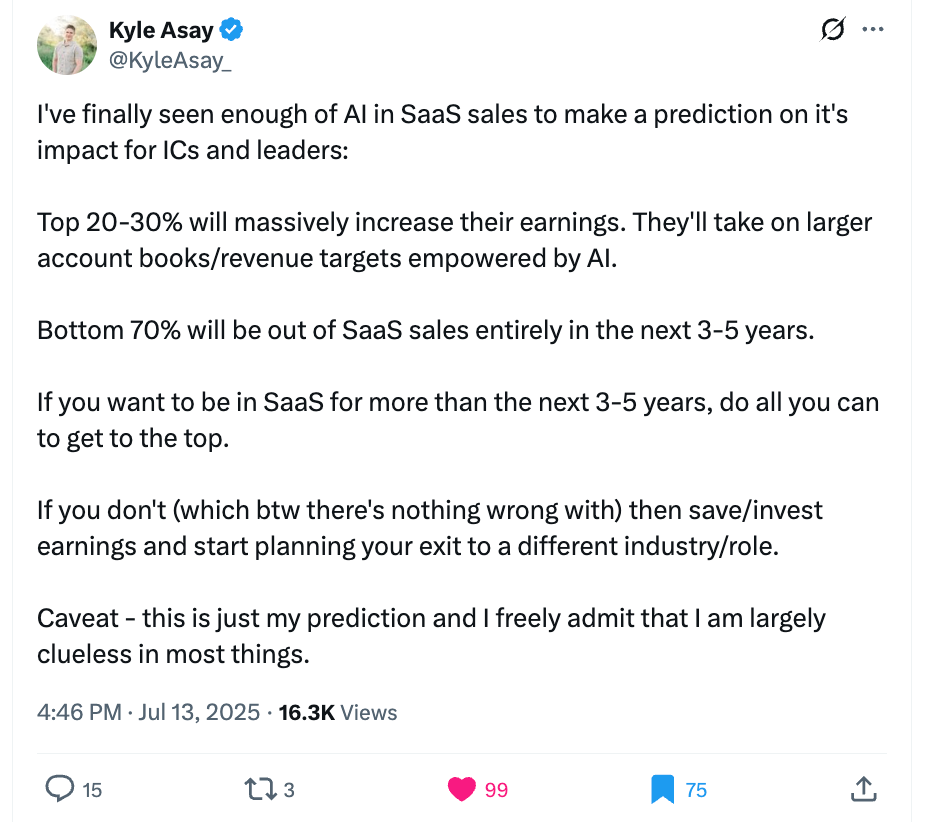
As tools standardize, performance gaps widen. Not because of technology, but because individuals differ in how they think, decide, and adapt.
This is the quiet reshuffling of the market:
Predictions in 2026
Output continues to increase. AI keeps accelerating execution across GTM and creating more will remain easy.
Access tightens. As noise compounds, attention becomes harder to earn and easier to lose.
Judgment becomes visible faster. Weak thinking will be exposed while strong judgement will compound.
Emotional signatures will matter more. Buyers will gravitate towards voices that feel credible, human, and grounded in understanding.
Generalists without depth will struggle. Breadth without domain mastery becomes increasingly fragile.
None of this is new. The pace is.
How to Stay Ahead
Principles, not tactics.
Build judgement before leverage
Learn markets and master your craft, not just tools and your product
Use AI to pressure test your thinking, not replace it
Do the unscalable when everyone else automates
History is cyclical.
Technology evolves rapidly.
People evolve far more slowly.
2025 feels like a freeze-frame in a fast-moving film - screens everywhere and instant access to anything we can imagine. But when the camera pulls back, the story beneath it all hasn’t changed nearly as much as it seems.
We’re still humans huddled around the campfire - sharing stories, navigating uncertainty, and deciding who to trust.
That pattern has endured across time, business, and industry. And in GTM, it’s still where the advantage lives.
Despite rapid advances in technology, the human elements haven’t changed at all.
The tension between accelerating technology and enduring human behavior is the throughline heading into 2026.
Purpose.
Below are a few additional pieces that informed this perspective but weren’t directly referenced above.
As always, thank you for reading.
Wishing you all a Happy New Year. See you in 2026.
-Andrew K
Acknowledgments: Further Reading & Influences
Best Software & AI Content of 2025 - Matt Harney SaaSletter
The End of Software - Chris Paik
A Buyer Sharing How They Buy - Kyle Asay
The Best Salespeople Have One Thing in Common - Chris Orlob
2026 AI Predictions - Greg Isenberg
Another banger.
Good stuff + thanks for the mention!