

This post is part of the Hacking Sales GTM Trends series. If you’re new here, check out the Start Here page.
In case you missed it, The Deal Narrative Kit is now available → Download here
2026 is coming in hot.
Models, wrappers, agents, “vibe coding”.
While everyone is focused on what’s visible above ground, the real shift is happening beneath the surface.
It requires second-order thinking.
A contrarian stance.
In 1929, Joseph Kennedy famously said:
“When the shoe shine boy is giving stock advice, it’s time to get out”.
This wasn’t an isolated moment. History repeats this pattern:
1849 Gold Rush
Early 1900s Texas Oil Boom
Dot-com Bubble
2008 Housing Crisis
In every rush, people chase the obvious opportunity.
The winners don’t.
They either serve the rush or bet against it.
Gold Rush → Levi Strauss sold jeans; Sam Brannan sold supplies
Oil Boom → Halliburton sold services while operators went broke
1929 → Kennedy exited early
2008 → Michael Burry shorted housing
Same pattern. Different decade.
This is second-order thinking.
It’s part of the AI conversation that almost no one is having.
AI is the Current Rush
Right now everyone is building.
Models. Wrappers. Agents. “Vibe coding.”
If you’re in tech, it almost feels irresponsible not to be shipping something.
Sometimes, the urge turns into this:
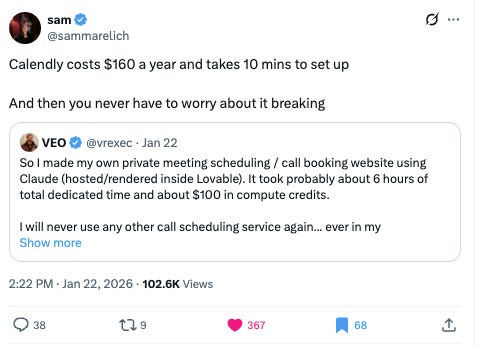
Credit: Sam Marelich via X (link to post)
Is that productive or just motion disguised as progress?
This is where second-order thinking starts to matter.
Not can you build something.
But should you.
With everyone chasing Claude, the advantage isn’t just in the obvious serving economy ie hardware, data centers, energy.
It’s in something far less flashy.
Being extremely competent in your domain.
Second-order thinking isn’t about rejecting AI.
It’s about understanding what becomes scarce because of it.
When tools become abundant, leverage shifts elsewhere.
That’s exactly what’s happening in GTM right now.
AI isn’t Scarce. Competence Is.
The ZIRP era trained an entire generation of GTM teams around:
Process-driven selling
SDRs to source and qualify, AEs to close
MEDDPICC, qualification frameworks, dashboards
“Grow at all costs”
Being a “good” seller was enough.
We’re now seeing the whiplash effects.
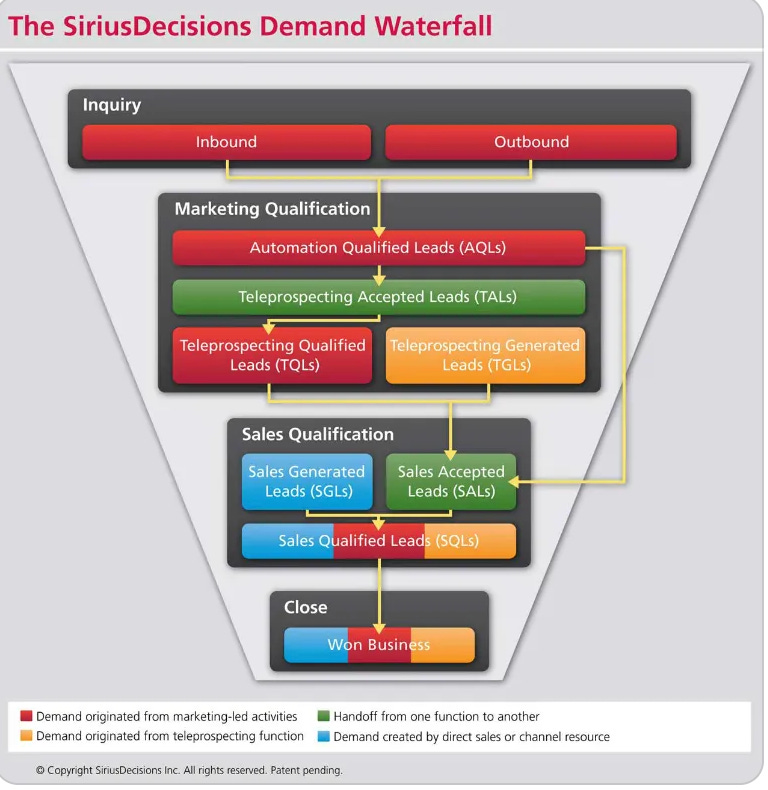
Credit The Deal Director of Infra Play, via Substack (link to post)
The Deal Director captures what’s changed:
Buyers are more informed
Noise is everywhere
Executives are detached from real market signal
Process without understanding collapses
Command of the sales process alone no longer creates leverage.
Competence does.
The Deal Director also notes that in infrastructure, sellers need to be savvy, technical, and deeply knowledgable.
I don’t sell infrastructure. I sell martech insights and analytics.
But I see the same shift every day.
Customers don’t want better process, they want better recommendations.
Being a “good” seller with command of a process doesn’t cut it anymore.
My sense is that the edge is shifting towards the skillset, not the AI.
That doesn’t mean AI isn’t transformational. It is.
But it doesn’t replace competence.
And what’s interesting is this shift isn’t happening only in GTM.
The “Dead” Functions Are Thriving
The functions that were supposedly "dead" because of AI are the ones adopting it the fastest.
Not replacing themselves.
Amplifying themselves.
Matt Harney at SaaS Letter pointed this out in his State of AI Report. Frontier AI users are overwhelmingly concentrated in writing, communication, and coding.
By a landslide.
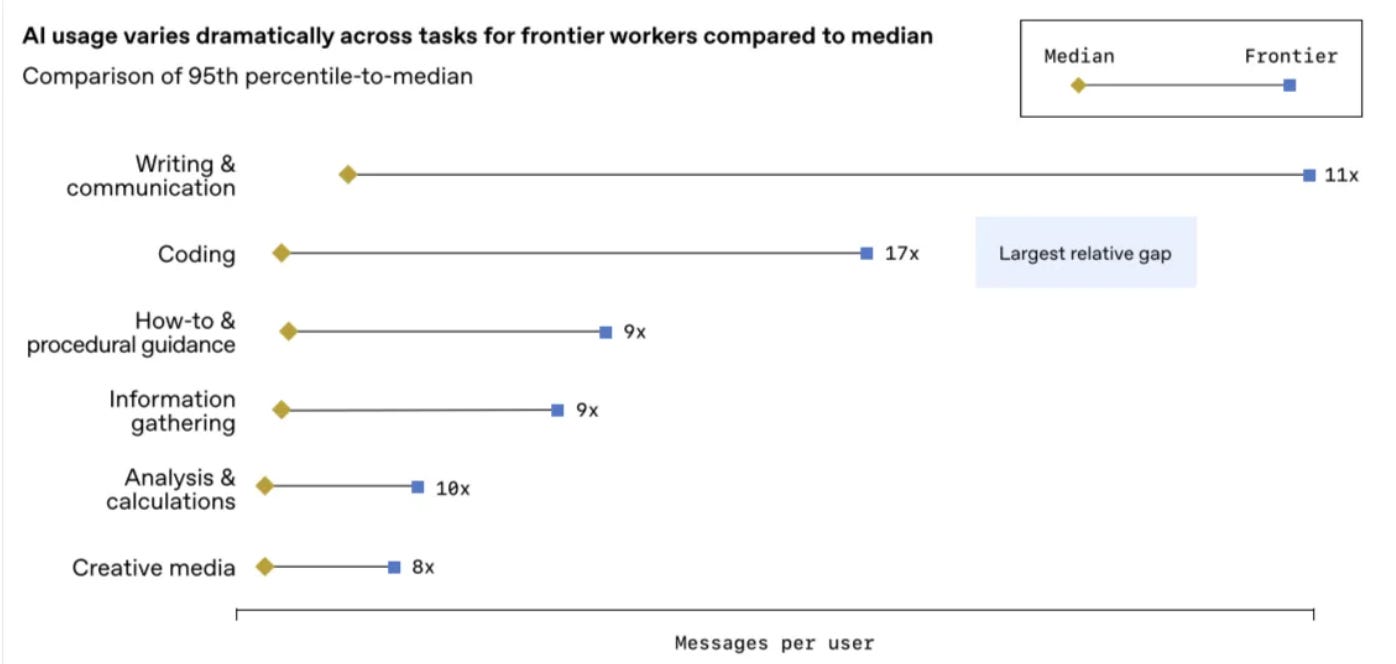
Credit Matt Harney
These were the very functions most people assumed AI would eliminate.
The market is saying the opposite.
What’s happening instead is more interesting:
AI isn’t removing the need for these roles - it’s raising the bar for them.
Storytelling is in high demand.
Open AI is hiring SDRs:
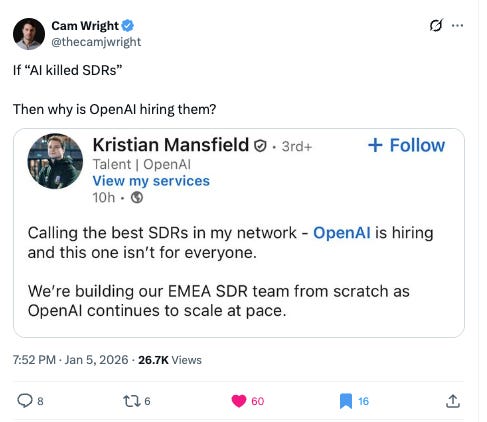
Credit: Cam Wright of Go To Market Operator, via X (link to post)
Writers, too:
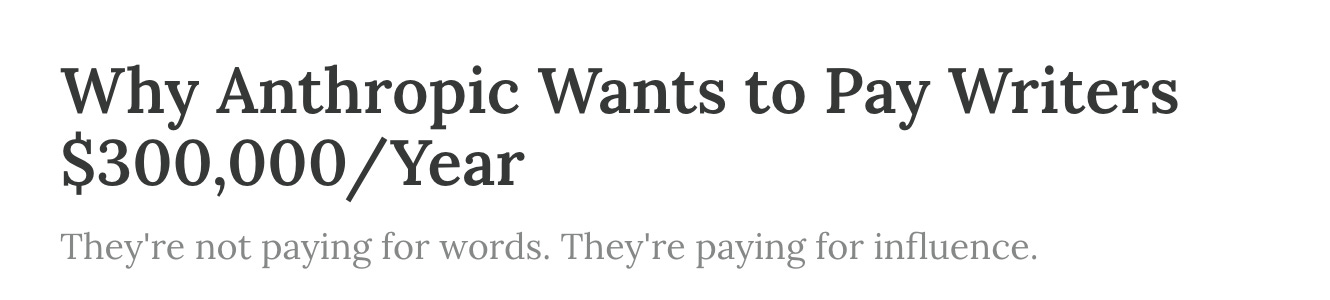
Credit: Sam's Newsletter, (link to post)
Why?
Because great writing forces clear thinking.
Clear thinking shapes decisions.
And decisions move markets.
AI makes average output cheaper.
It makes real competence more valuable.
The throughline:
Despite AI expanding what’s possible, the principles endure.
Deep domain competence
Applied skill, not surface fluency
Understanding Emotions
Synthesizing and recommending
Purposeful use of tools
This second-order shift isn’t just limited to GTM and “dead” functions.
We’re seeing the same pattern show up in how entire industries are investing and where capital is flowing next.
Where the Smart Money is Going
First-order thinking in AI is straightforward:
Buy more Nvidia GPUs. Scale faster. Win.
Second-order thinking asks a harder question:
What happens when compute becomes a geo political bottleneck?
Neural Foundry recently highlighted how OpenAI and xAI Are Losing the AI Wars to Anthropic and Google, pointing to recent comments from Anthropic’s CEO at Davos.
The implication isn’t about model quality. It’s about risk.
So the rationale response isn’t “build more” - it’s to insulate.
Build compute sovereignty. Reduce dependency. Anchor value in things that can’t be easily abstracted away.
Second-order thinking applies the same logic to where lucrative opportunities lie in GTM.
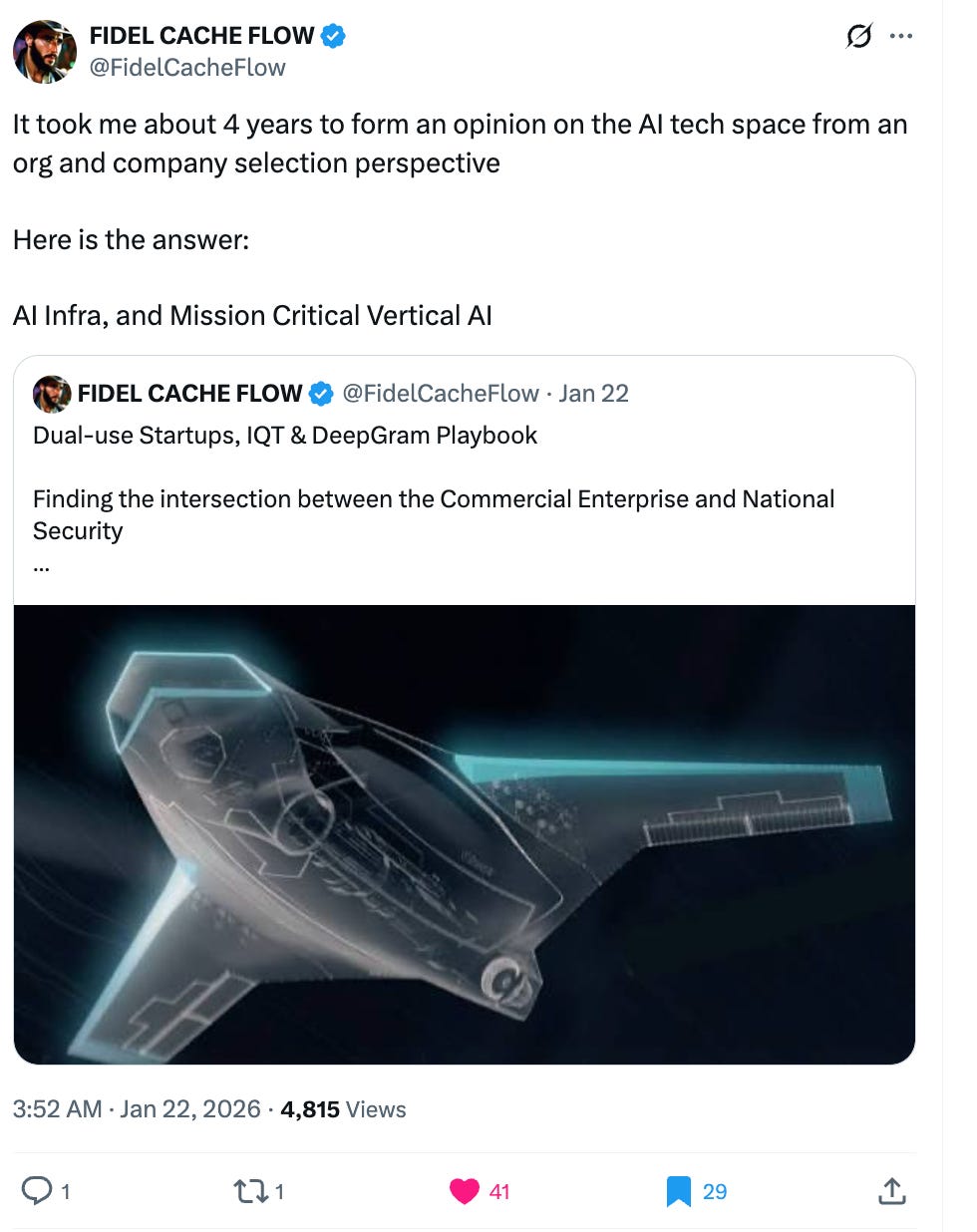
Credit: FidelCacheFlow
The takeaway:
software and cloud based apps are becoming the commodity
capital is flowing to AI tied to physical infrastructure and vertical constraints
relationship mapping replaces cold outreach as the scarce skill
Boring > sexy
Second-order thinking doesn’t chase momentum.
It positions around constraints.
What This Means Going Forward
This edition wasn’t meant to dismiss the opportunity of AI.
AI is an integral part of my day to day.
You should be building, experimenting, and learning.
You should be fluent in code and AI.
But when something becomes widely accessible, the leverage moves.
Towards real skill.
Towards domain depth.
Towards people who can apply tools with intent.
When the hype builds, that’s usually the moment it’s worth questioning.
A Contrarian stance.
I’ve shared a few additional pieces below that have inform my thinking and approach to GTM. I’d recommend them to anyone operating in this space.
As always, thank you for reading.
-Andrew K
PS - if you liked this article, feel free to give a “like”, “comment”, or “share” with your network
Further Reading Recommendations:
Great insights and thanks for recommending!